Gelato in Singapore: Why Our Scoops Are Different
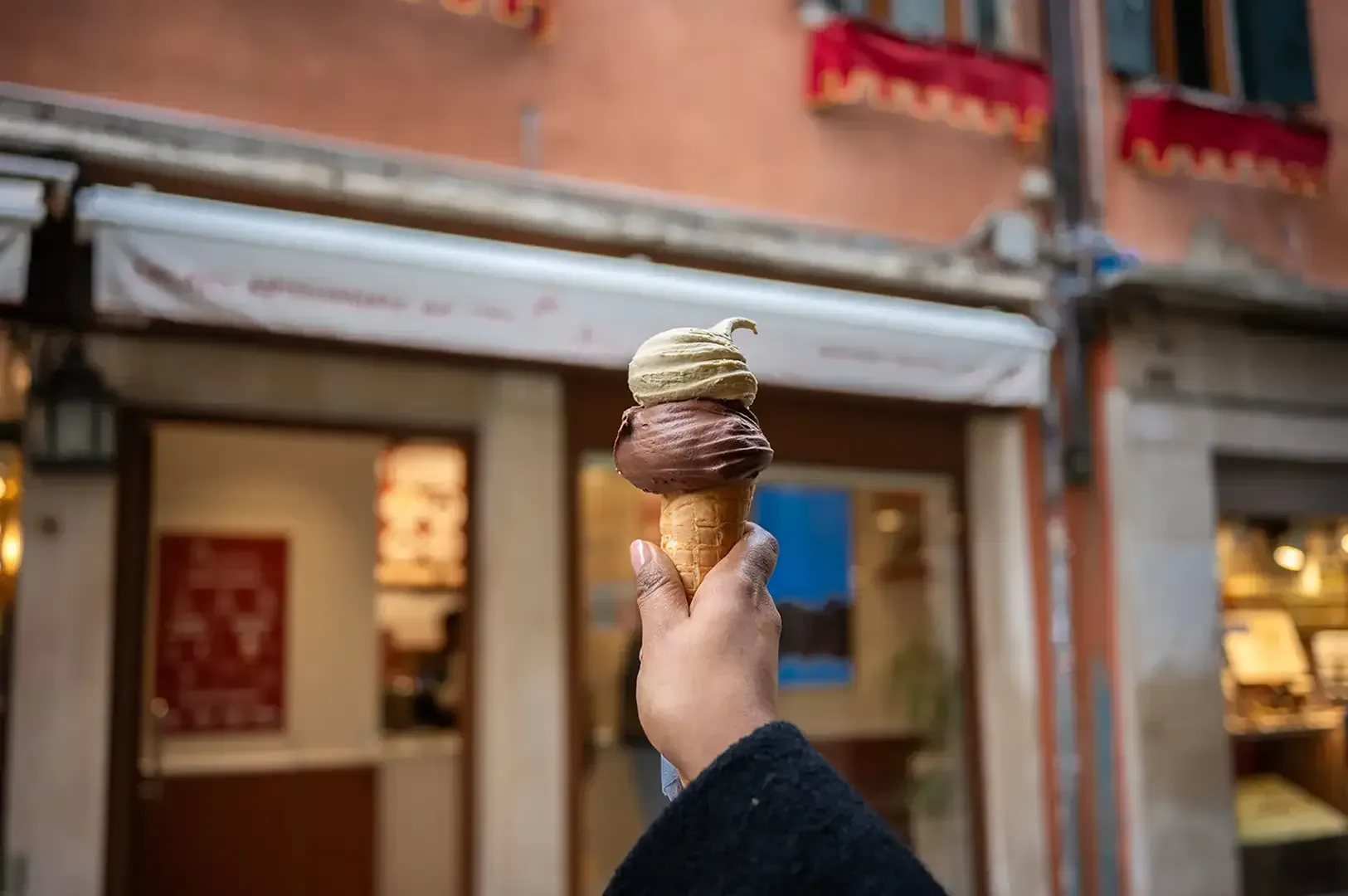
Gelato is a frozen dairy dessert that differs from ice cream in fat content, texture, serving temperature, and air content, which is why it tastes denser and often more intense. In Singapore, gelato also bends Italian tradition toward tropical flavours, slightly sweeter profiles, and a lighter consistency that suits the local climate. Quality gelato melts slowly and evenly, is stored in covered flat pans, and carries naturally muted colours.
There is a particular kind of relief that comes from stepping into a gelato shop on a humid Singapore afternoon. The air is cool. The colours behind the glass are soft and inviting. You lean forward, trying to decide between pistachio gelato and something new — maybe gula melaka, maybe lychee — and for a moment, everything slows down.
Along the way, I will break down how gelato differs from ice cream, how local shops adapt the Italian model, how to spot quality, which buying mistakes to avoid, where to find standout gelato in Singapore, and a few common questions that come up once you start paying closer attention.
What Is Gelato, and How Does It Differ from Ice Cream?
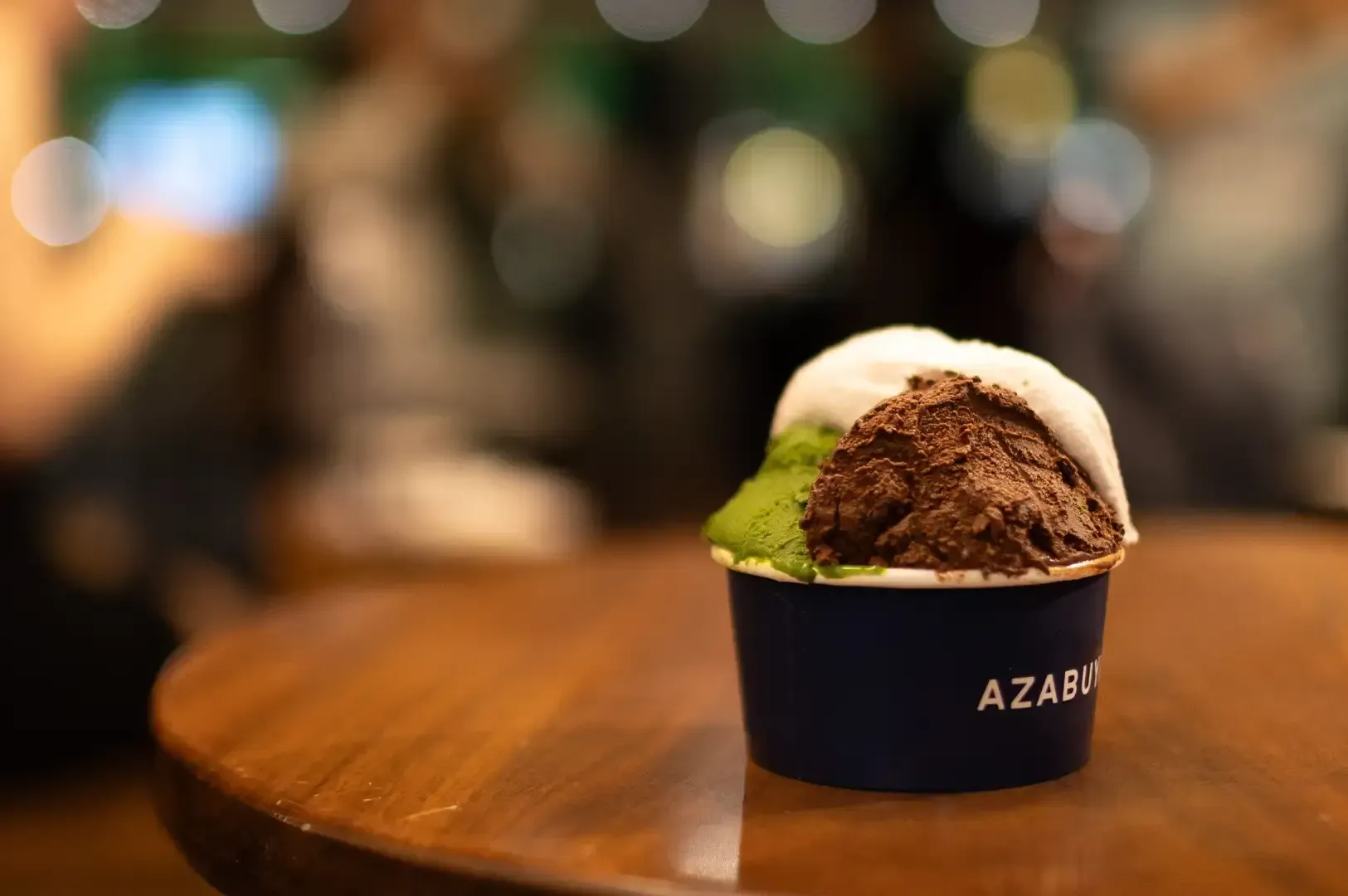
Gelato and ice cream share a common foundation — both are frozen, dairy-based desserts — but the similarities begin to diverge quite early in the process. In authentic Italian practice, the base is prepared from simple ingredients with few to no egg yolks, starting from a cleaner milk-forward custard than many ice creams.
Fat content is one of the most fundamental differences. Italian gelato is made with more milk and less cream than ice cream, resulting in a fat content of roughly 4 to 9 percent. Standard ice cream, by comparison, typically sits at 10 percent or higher. Less fat means the flavours are not cushioned by richness — they come through more directly, which is why a well-made pistachio gelato tastes so unmistakably of pistachio; before freezing, the ingredients are heated to 85 °C for pasteurization, then mixed and cooled to 5 °C.
Air content, or overrun, is another key distinction. Ice cream is churned at a faster speed, which incorporates significantly more air — sometimes up to 50 percent or more by volume. Gelato is churned more slowly, keeping its air content low and its texture dense. When you hold a spoonful of gelato, it feels substantial. It does not collapse or dissolve instantly the way a highly aerated ice cream does.
Serving temperature matters more than most people realise. Gelato is served at around -12°C, while commercial ice cream is typically stored at -18°C. That warmer temperature keeps gelato soft and pliable, allowing it to melt gently on the tongue rather than requiring effort to bite through. It also means the flavours are more immediately present, because cold suppresses our ability to taste. Sugar also helps by binding water so the dessert does not freeze solid.
Put simply: gelato is denser, less fatty, served warmer, and more intensely flavoured than ice cream. These are not minor differences. They add up to a meaningfully different eating experience, with smaller ice crystals being a key reason it feels smooth.
What Makes Gelato in Singapore Different from Italian Gelato?
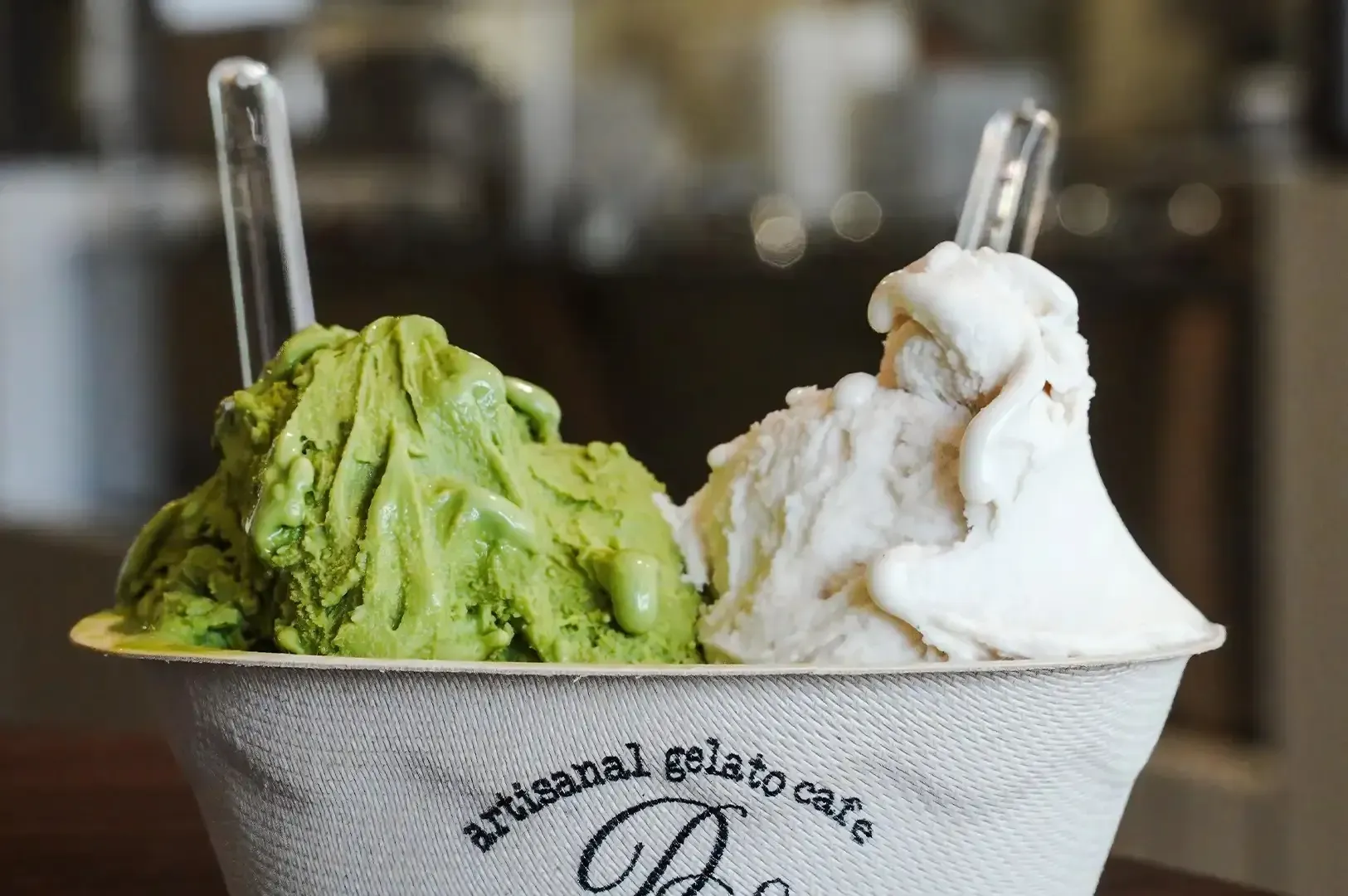
When Italian gelato first began appearing regularly in Singapore, it arrived largely unchanged from its European form. Over time, however, local gelato makers started adapting their recipes to better suit the environment and the palates of Singaporeans. The result is something distinct — gelato that honours its Italian origins while local shops adapt recipes in ways that still try to preserve authenticity.
The climate drives many of the changes. Singapore's heat and humidity accelerate melting, so local gelato is often made with a slightly lighter, more fluid texture than its Italian counterpart. A denser Italian-style gelato, left out in 32-degree heat, would become a puddle far too quickly. Adjusting the recipe allows the scoop to hold its shape just long enough to be enjoyed.
Sweetness levels tend to run higher. This reflects both local preference and the need to balance flavours against tropical fruits, which can be bracingly sour or intensely fragrant. A lychee gelato, for example, needs a certain level of sweetness to feel harmonious rather than sharp.
The flavour range is where local gelato truly comes into its own. Specifically, this guide is about places serving gelato rather than ice cream-style frozen desserts. Traditional Italian flavours —
stracciatella,
hazelnut,
pistachio — still appear on most menus, and they remain some of my personal favourites. But alongside them, you will now regularly find mango, durian, coconut, pandan, gula melaka, and lychee. These are not gimmicks. When made well, they represent a genuine and thoughtful conversation between two food cultures. A pandan gelato with the perfect balance of floral sweetness and creamy, milky texture can be quietly extraordinary.
How to Recognise High-Quality Gelato in Singapore
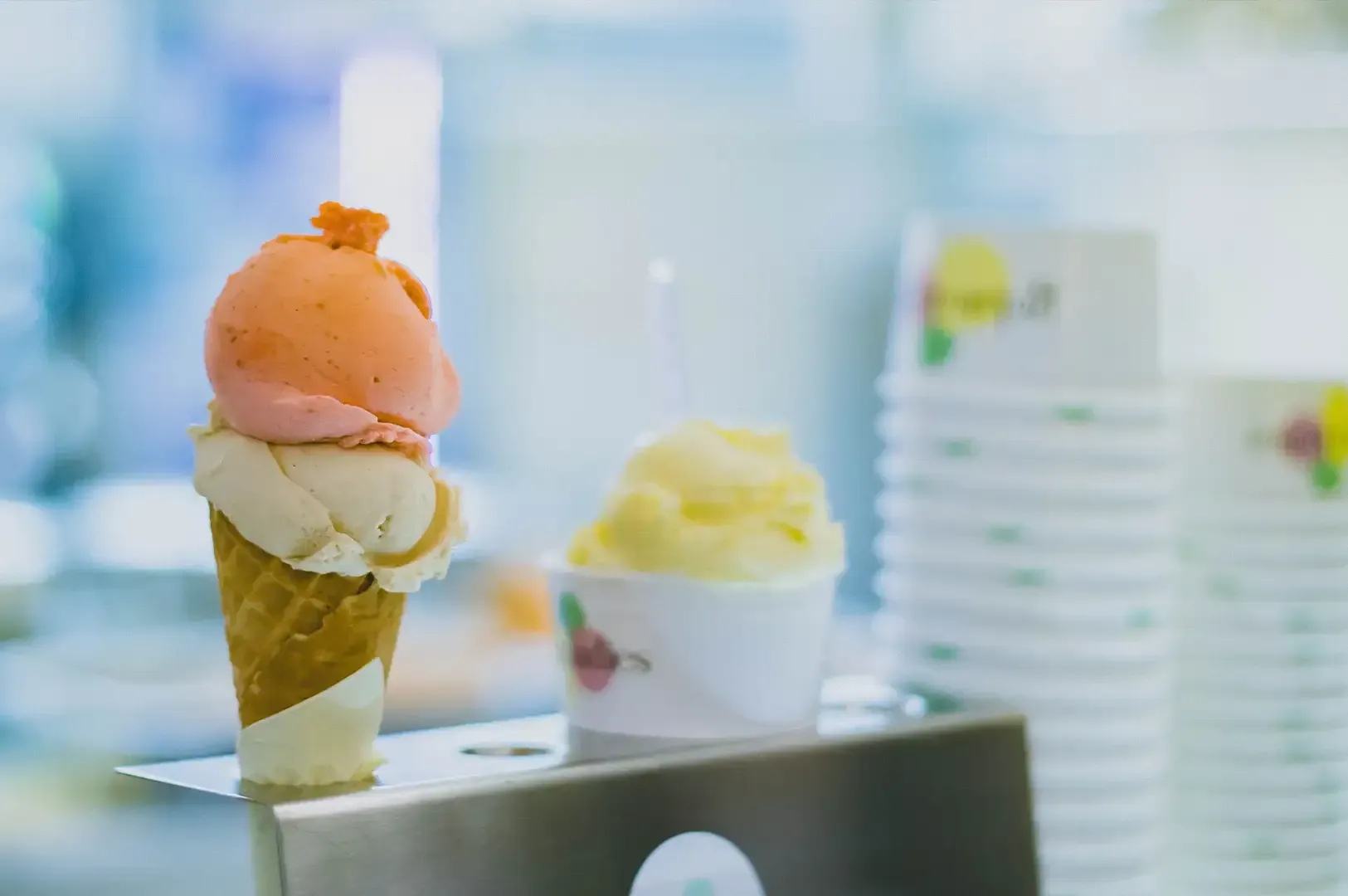
Knowing what to look for changes everything. Once you understand the markers of quality, you stop being swayed by presentation and start trusting your instincts.
What does the colour tell you?
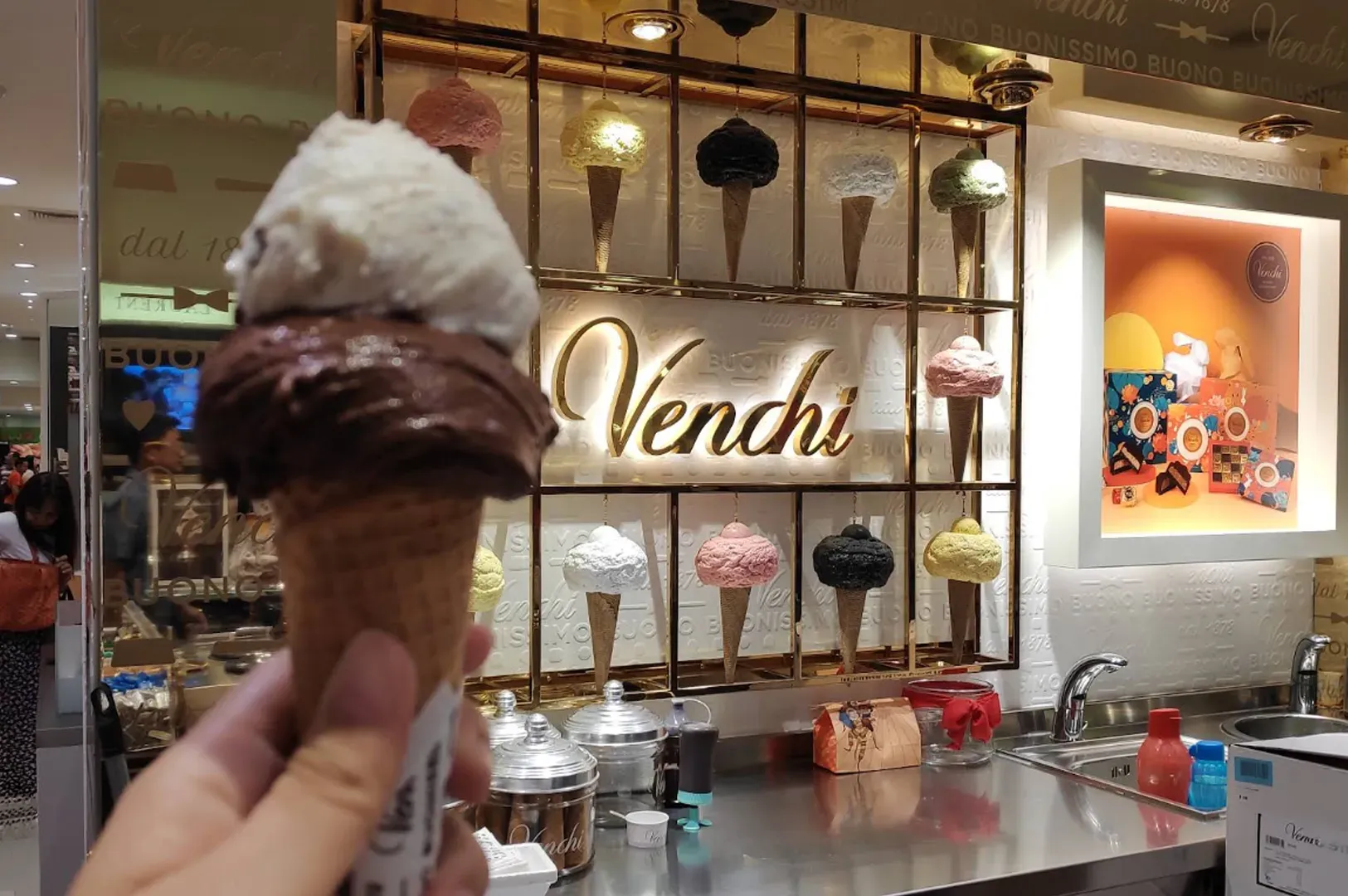
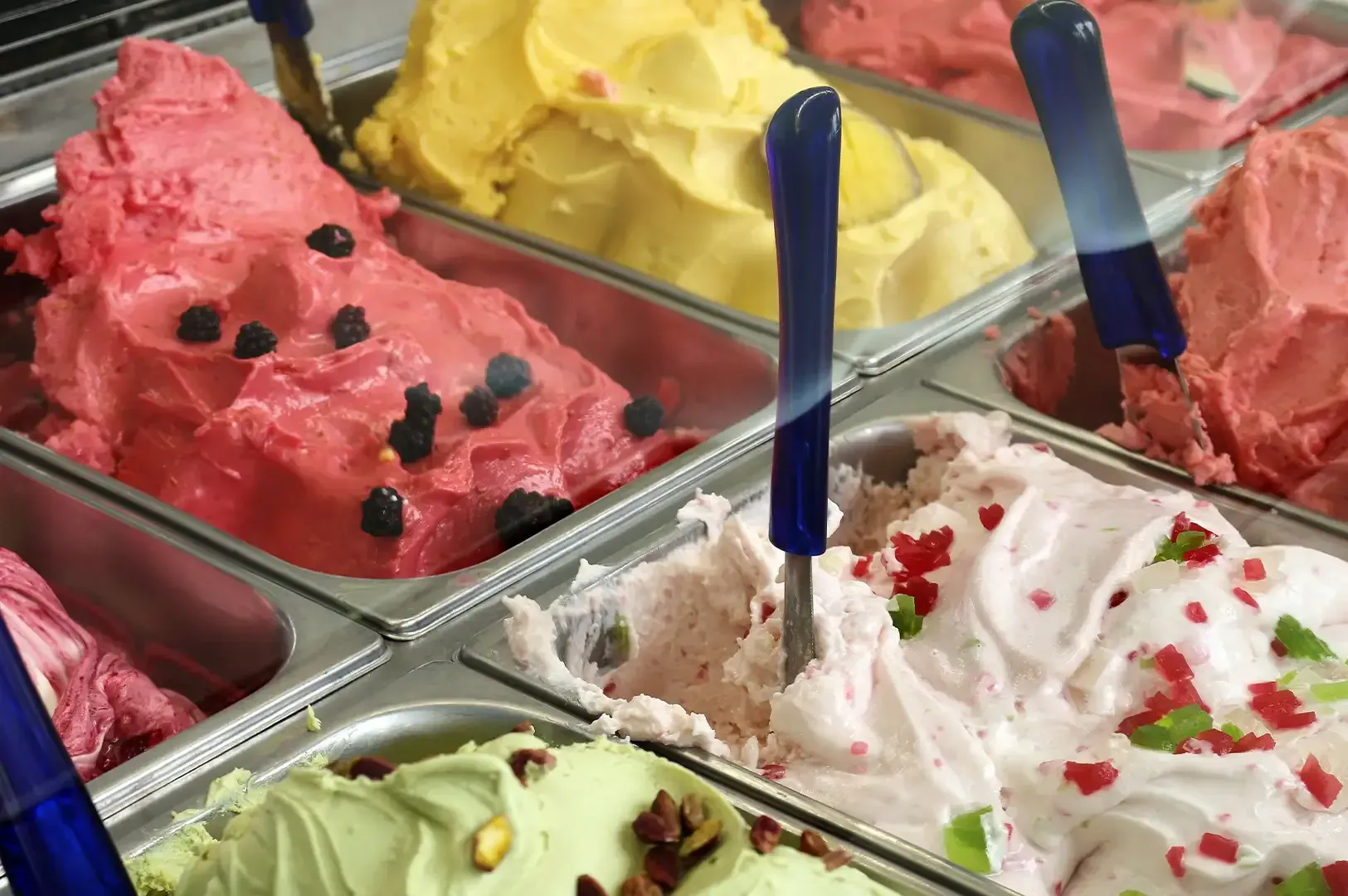
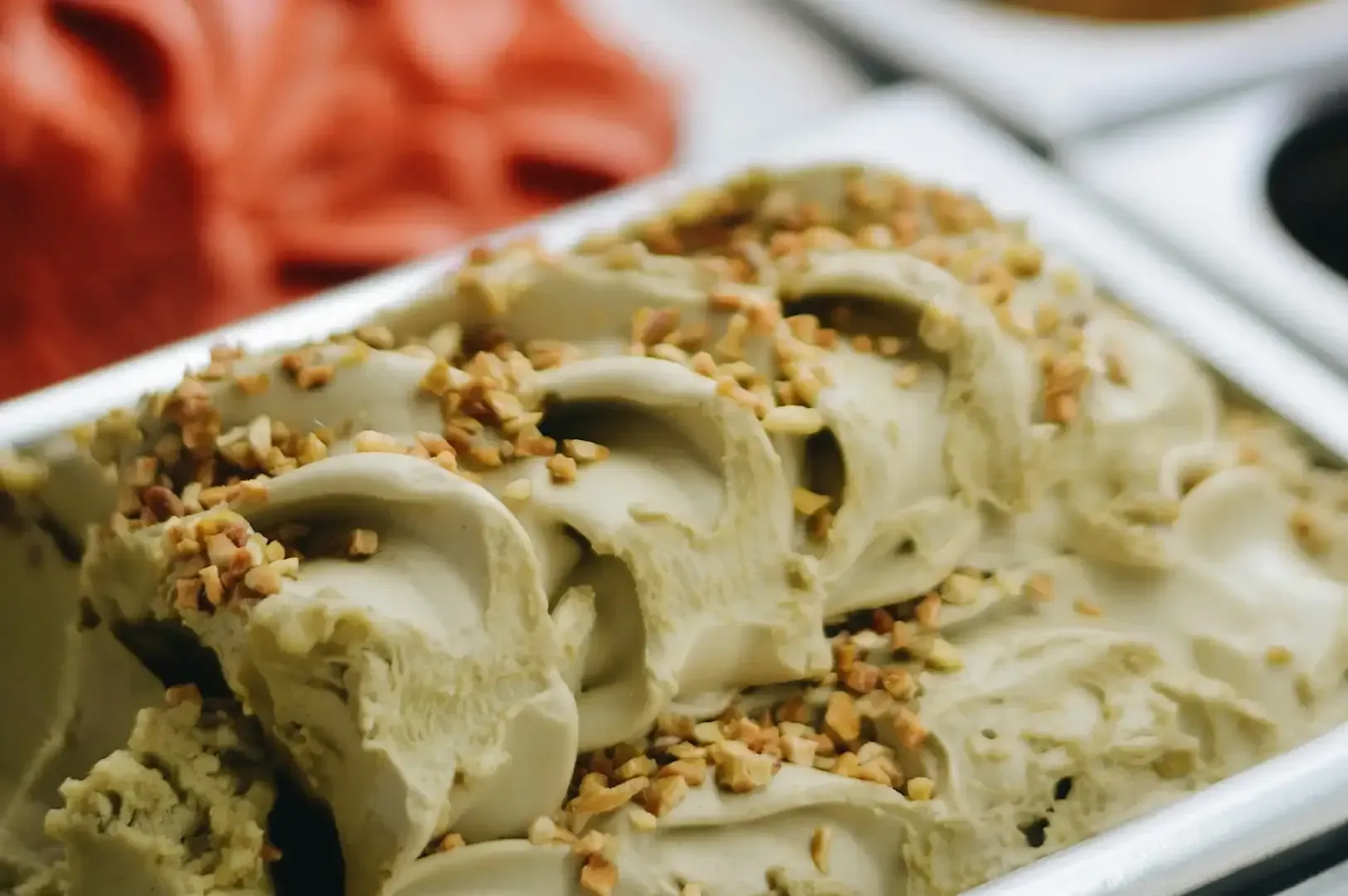
Natural gelato has muted, honest colours. A good pistachio gelato is a soft, slightly grey-green — not a vivid crayon green. Strawberry should look like real strawberries: pink, slightly variable, not fluorescent. If the colours behind the display glass look artificially bright, rather than muted, vanilla-looking natural shades, that is usually a sign that artificial colouring (and often artificial flavouring) has been used.
How is the gelato stored?
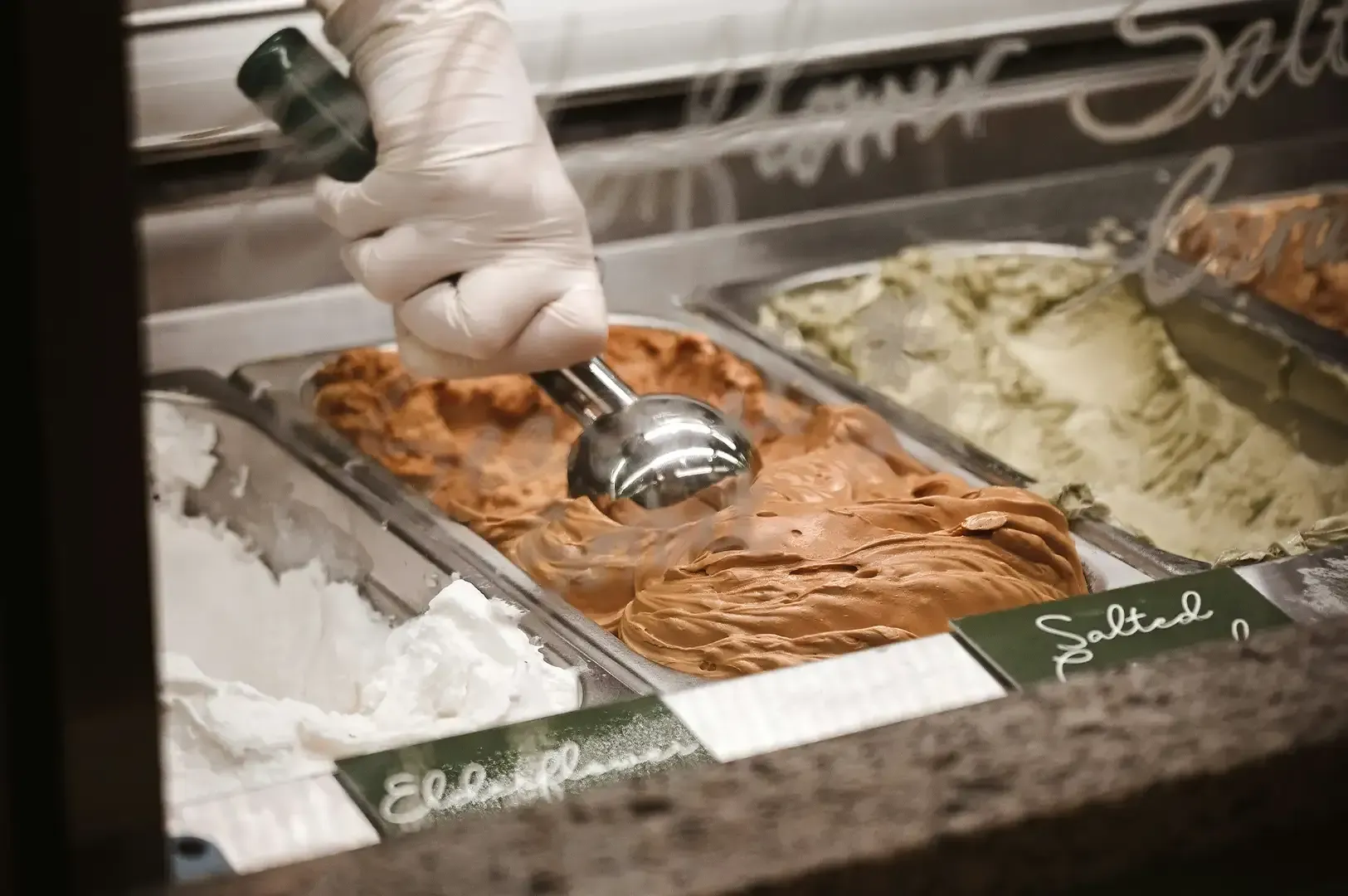
Traditional Italian gelato is stored in covered flat metal containers called pozzetti, which are kept below counter level and sealed with lids. This method maintains a steadier temperature and better quality by protecting the gelato from temperature fluctuations and light, both of which affect texture and flavour. That is part of the authenticity of traditional Italian gelato service. Many quality gelato shops in Singapore use this method. When you see gelato piled high in dramatic peaks above the display case, that is a sign of high air content — which usually means lower density and blander taste.
How does it melt?
Good gelato melts slowly and evenly. When you receive your scoop, watch how it behaves over the first minute or two. It should stay smooth for a bit before softening gradually from the outside in and loosening into an even pool, with the rest remaining cohesive rather than splitting into watery and fatty components. A scoop that weeps clear liquid quickly, or that turns icy and grainy as it melts, suggests either poor formulation or improper storage.
How does it feel?
When gelato is the right temperature and texture, it has a silky, almost elastic quality on the tongue, helped by smaller ice crystals. It resists briefly, then comes close to perfect balance before yielding. There is a slow, even melt that coats your mouth with flavour. If a scoop is rock-hard and requires force to eat, it has been stored too cold — which tends to dull both texture and taste.
Common Mistakes to Avoid When Buying Gelato in Singapore
Even experienced gelato lovers fall into a few recurring traps.
Choosing by colour. Bright, vivid colours are appealing, but they are often a marker of artificial ingredients rather than quality.
Confusing tall scoops with value. A scoop piled dramatically high has a lot of air in it. You are paying for volume, not substance. A smaller, denser scoop from a reputable shop will often be more satisfying.
Not asking for a tasting. Most gelato shops will offer a small tasting spoon before you commit. Use it. Flavour profiles vary widely between shops, and this is the only reliable way to know whether a particular gelato suits your palate.
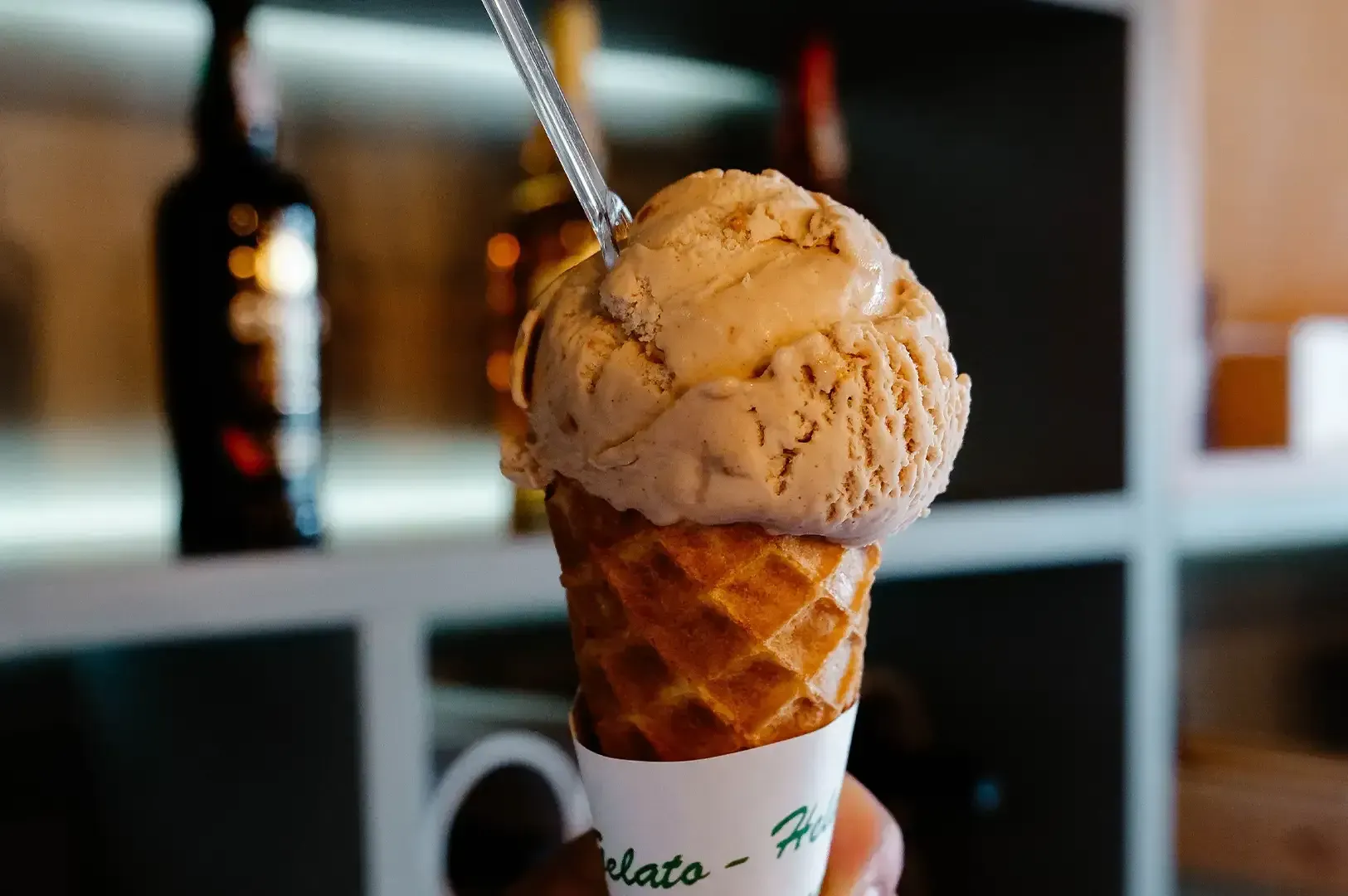
Underestimating the heat. Singapore's humidity means your gelato will melt faster than you expect, especially if you are eating outdoors. Come prepared with napkins. If you are choosing between a cup and a cone, know that a cone tends to make the experience messier in the heat — though it is often the more enjoyable option if you are staying close to air conditioning.
Visiting at peak hours. Afternoons on weekdays are generally quieter, and the staff will have more time to talk you through the flavours. Weekend crowds can mean faster turnover, which occasionally affects consistency.
Gelato Shops Worth Visiting in Singapore
Singapore's gelato scene has grown considerably over the past decade, and several shops have established reputations that are genuinely deserved. These are the ones I return to.
Freshio Gelato
Freshio Gelato has built a following on the strength of its commitment to fresh, natural ingredients. The flavours tend to be clean and well-defined — you taste what you are supposed to taste, without distraction. Their local flavours, including coconut and pandan, are handled with care, and the texture consistently reflects proper technique. This is the kind of shop where asking for a tasting feels encouraged rather than awkward. Freshio Gelato also has an outlet at Sunshine Plaza.
Burnt Cones
Burnt Cones draws attention partly for its presentation, but the gelato itself holds up to scrutiny. The flavour combinations are thoughtful, often pairing traditional Italian bases with local or unexpected ingredients. The texture is dense and slow-melting, which is the right sign. It is a good place to visit if you want something a little more experimental without sacrificing quality.
Tom's Palette
Tom's Palette is one of the longer-standing names in Singapore's gelato scene, and the consistency over the years has been reassuring. Their pistachio gelato is among the better versions I have tried locally — nutty, slightly savoury, and not oversweetened. They also offer a good range of tropical flavours that feel genuinely considered rather than formulaic.
Acre / Hundred Acre Creamery
Acre (sometimes listed as Hundred Acre Creamery) takes a farm-to-cone approach, with an emphasis on locally sourced and natural ingredients. This tends to result in flavours that feel grounded and honest. The texture leans on the denser side, which I appreciate. If you care about where ingredients come from, this is the shop worth seeking out.
For more sweet discoveries around Singapore, the
hidden dessert gems tucked into Orchard Plaza's food scene are worth exploring alongside your gelato trail.
Frequently Asked Questions About Gelato in Singapore
What is the difference between gelato and ice cream?
Gelato contains less fat than ice cream (typically 4–9% vs. 10%+), is churned more slowly to reduce air content, and is served at a warmer temperature of around -12°C compared to ice cream's -18°C. The result is a denser, more intensely flavoured product with a silky, slow-melting texture.
Why does gelato in Singapore taste different from Italian gelato?
Singaporean gelato is often adapted to suit the local climate and palate. This means a slightly lighter texture to account for faster melting in humidity, higher sweetness levels to complement tropical fruit flavours, and a broader range of local flavours such as pandan, gula melaka, durian, coconut, and lychee.
How can I tell if gelato in Singapore is high quality?
Look for naturally muted colours, gelato stored in covered flat pans (pozzetti-style), a slow and even melt, and a dense, silky texture. Red flags include neon colours, towering whipped peaks above the display case, a rock-hard texture, and rapid watery separation when melting.
How much does gelato cost in Singapore?
A single scoop of gelato in Singapore typically costs between S$4 and S$6. A double scoop usually ranges from S$7 to S$10. For example, Dopa's pistachio gelato costs $6.50, Gelato Garden's Gold Pistachio is $7, and Birds of Paradise pistachio is $7.80.
What are the best gelato flavours to try in Singapore?
Beyond the Italian classics like pistachio gelato, hazelnut, and stracciatella, Singapore-specific flavours worth trying include pandan, gula melaka, coconut, mango, durian, and lychee. These reflect a genuine local adaptation of the gelato tradition and are best appreciated at shops using natural, fresh ingredients.
Is it better to eat gelato in a cup or cone in Singapore?
Both work, but the humidity accelerates melting considerably. A cup is more practical if you are eating outdoors or moving around. A cone can be enjoyed comfortably if you are staying in an air-conditioned space. Either way, bring napkins.
Which gelato shops are worth visiting in Singapore?
Freshio Gelato, Burnt Cones, Tom's Palette, and Acre (Hundred Acre Creamery) are all shops with established reputations for quality. Each has a slightly different character, so it is worth visiting more than one to find the style that suits you.
A Final Word on Eating Gelato Well
Understanding what makes gelato different from ice cream, and what makes gelato in Singapore different from Italian gelato, does not make the experience more complicated. It makes it more satisfying. When you know what to look for, each visit to a gelato shop becomes a small, deliberate act of appreciation for an artisan product that is best enjoyed fresh within a few days of being made.
My practical advice is simple: ask for tastings, watch how the gelato melts, visit during quieter hours, and resist the pull of colours that look too vivid. A useful fact to remember is that the slow churning process is a big part of what gives it its dense, smooth texture. And if you are unsure where to start, go for the pistachio gelato first. It is the kind of thing that reveals a great deal about how a shop approaches its craft.
If you enjoy exploring Singapore's dessert scene more broadly, click here for a guide to my ice cream recipe! — useful reading if you like combining a good scoop with a comfortable place to sit, or if you want to read more on related treats.
Take your time. Gelato rewards patience.
Recent Posts